Artificial Intelligence is transforming digital marketing—but can it replace human creativity? Discover how businesses can use AI wisely without losing the personal touch that customers value.
Introduction
Artificial Intelligence (AI) has changed the way businesses approach digital marketing. From generating content and designing graphics to automating customer support and analyzing data, AI tools have made marketing faster and more efficient than ever.
But as AI becomes more powerful, many business owners are asking an important question:
Can AI replace human marketers?
The answer is simple: No—but businesses that combine AI with human creativity are gaining a significant competitive advantage.
Let’s explore why.
The Rise of AI in Marketing
AI can complete tasks in seconds that once took hours. Businesses now use AI to:
- Write content ideas
- Create social media captions
- Generate advertising copy
- Analyze customer behavior
- Schedule social media posts
- Improve SEO
- Answer customer queries through chatbots
- Personalize marketing campaigns
These capabilities save time and allow businesses to focus on strategy and growth.
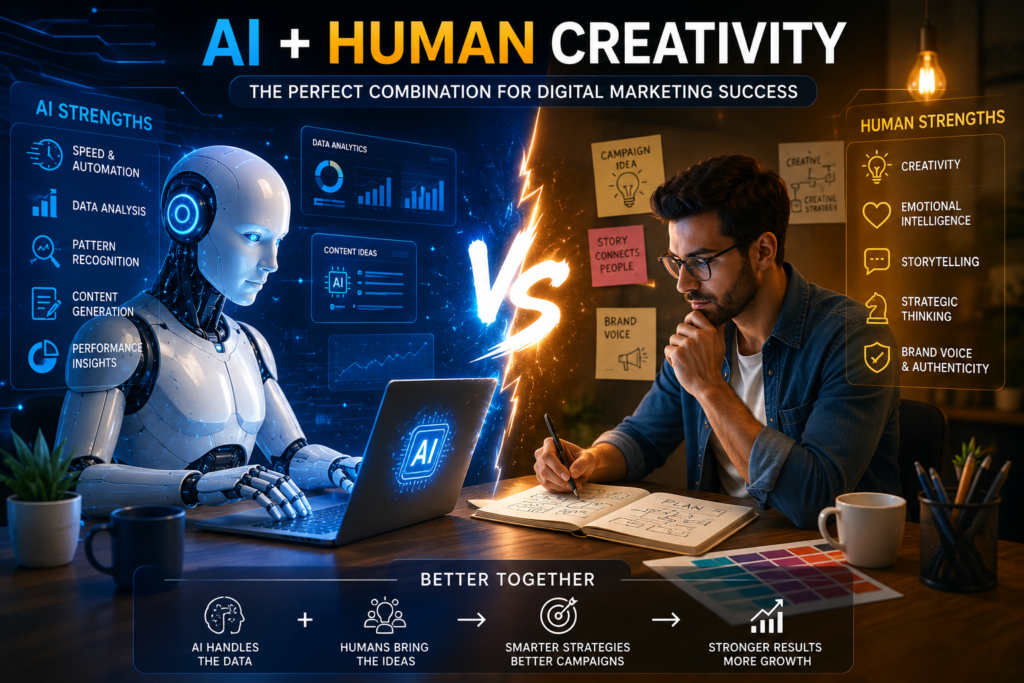
Where AI Excels
1. Speed
AI can generate multiple ideas, headlines, and marketing concepts almost instantly.
2. Data Analysis
It can process thousands of customer interactions to identify patterns that humans might miss.
3. Automation
Routine tasks like scheduling posts, email campaigns, and reporting can be automated efficiently.
4. Personalization
AI helps businesses deliver more relevant content by analyzing customer preferences and behavior.
Where Humans Still Win
Technology is powerful, but customers connect with people—not algorithms.
Human marketers bring qualities that AI cannot truly replicate.
Creativity
Creative campaigns often come from real experiences, emotions, and cultural understanding.
Storytelling
Great brands tell stories that inspire trust and build emotional connections.
Strategy
Choosing the right message, audience, and long-term direction still requires human judgment.
Brand Voice
Every successful brand has a unique personality. Maintaining that consistency requires thoughtful human oversight.
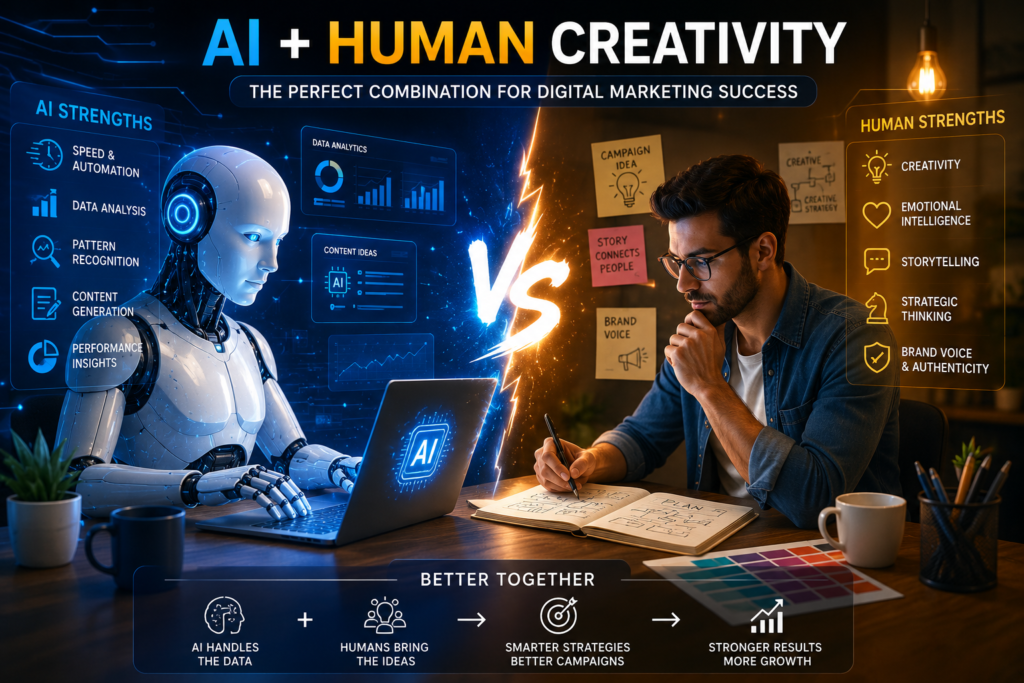
The Winning Formula: AI + Human Creativity
Instead of replacing marketers, AI works best as a powerful assistant.
For example:
- AI generates content ideas.
- A marketer refines them into compelling messages.
- AI analyzes campaign performance.
- A strategist uses those insights to improve future campaigns.
This combination increases productivity while maintaining authenticity.
Common Mistakes Businesses Make
Many businesses rush to automate everything. This often leads to:
- Generic content
- Repetitive messaging
- Weak brand identity
- Reduced customer trust
- Lower engagement
Customers quickly recognize content that lacks originality and authenticity.
How Small Businesses Can Use AI Effectively
You don’t need a large budget to benefit from AI.
Use AI for:
- Brainstorming ideas
- Keyword research
- Drafting captions
- Creating content calendars
- Organizing marketing tasks
But always:
- Review every piece of content.
- Add your expertise.
- Include real examples.
- Keep your brand voice consistent.
The Future of Digital Marketing
The future doesn’t belong to businesses that use the most AI.
It belongs to businesses that use AI intelligently while maintaining authentic communication with their audience.
Customers increasingly value:
- Transparency
- Personal experiences
- Trustworthy brands
- Helpful content
- Genuine human interaction
Businesses that balance technology with creativity will continue to stand out.
Final Thoughts
AI has become one of the most valuable tools in digital marketing, but it is not a replacement for human creativity. The strongest marketing campaigns combine the speed and efficiency of AI with the strategic thinking, empathy, and originality that only people can provide.
Rather than asking whether AI will replace marketers, businesses should focus on learning how to use AI as a tool that enhances creativity and improves results.
When used wisely, AI doesn’t replace great marketing—it helps create even better marketing.